About Rotary Table
Description.
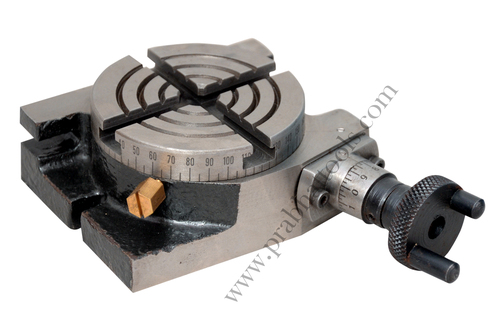
A rotary table is a precision work positioning device used in metalworking. It enables the operator to drill or cut work at exact intervals around a fixed (usually horizontal or vertical) axis.
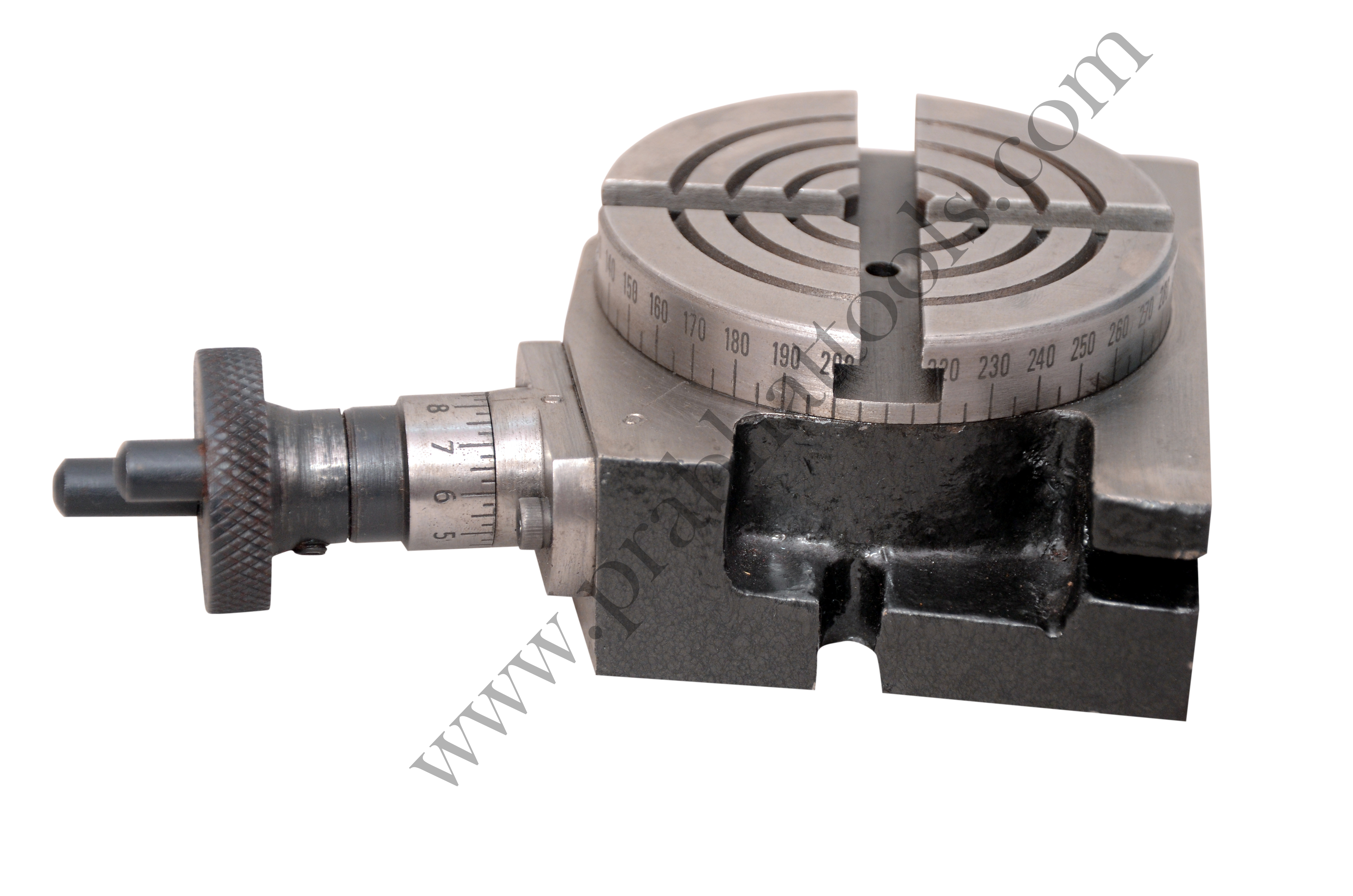
Precision Engineering for Enhanced MachiningEngineered to meet the rigorous demands of precision machining, this rotary table boasts exceptional accuracy and smooth rotation. Its 300 mm diameter, robust steel construction, and finely graduated 1-minute intervals empower users to achieve meticulous angular adjustments. Whether for milling, drilling, or intricate indexing, this rotary table supports an elevated standard of work in professional settings.
User-Friendly and Robust DesignWith a manual lock clamping system and four wide T-slots, setting up and securing your workpiece is both straightforward and secure. The polished finish ensures durability against corrosion, while the grey color provides a sleek, professional appearance. Its weight and balanced center height offer stability, making it suitable for extended industrial use.
FAQ's of Rotary Table:
Q: How is the 300 mm rotary table typically used in machining operations?
A: The rotary table is primarily used for precise angular positioning and rotational movement during milling, drilling, or cutting processes. Its 360-degree graduation and 1-minute interval allow for accurate indexing, which is essential for tasks such as circular cutting, hole patterns, and complex gear machining.
Q: What is the benefit of the 1-minute graduation interval on this rotary table?
A: The 1-minute graduation interval allows users to make very fine angular adjustments, enabling highly precise divisions and accurate machining. This level of detail is particularly beneficial for applications requiring intricate patterns or when manufacturing gears with specific tooth counts.
Q: Where is this rotary table manufactured and supplied from?
A: This steel rotary table is manufactured and supplied in India. It is available for exporters, manufacturers, suppliers, and traders who require reliable and precise rotary solutions for their operations.
Q: What process is involved in setting up the rotary table for machining?
A: Setup involves mounting the rotary table on the machine bed, securing the workpiece using the four 14 mm T-slots, aligning the center bore (MT-3) with the machine spindle, and locking the table position manually. The graduated dial helps set precise angles for each machining operation.
Q: When should I use the manual lock clamping system?
A: The manual lock clamping system should be engaged after positioning the table at the desired angle. This ensures the table remains stable and does not move during machining, maintaining precise alignment and rotational accuracy throughout the process.
Q: What are the usage advantages of the steel, polished finish rotary table?
A: The steel construction provides durability and strength, while the polished finish resists corrosion and wear. Together, these features ensure longevity and consistent precision, even in demanding industrial environments.
 +918010754649


 Send Inquiry



 Send Inquiry
 Send Inquiry
 Call Me Free
 English
 Spanish
 French
 German
 Italian
 Chinese (Simplified)
 Japanese
 Korean
 Arabic
 Portuguese