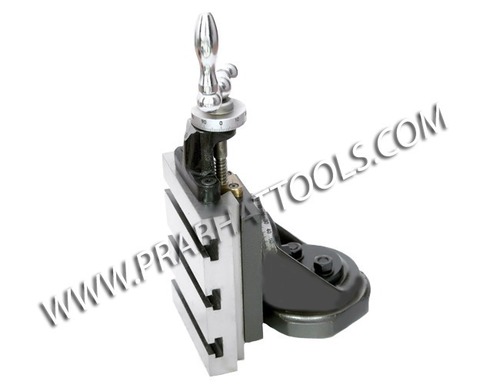
About Lathe Swivel Vertical Vise
A lathe swivel vertical vise is a specialized tool used in machining processes, specifically in conjunction with lathe machines. It is designed to securely hold and position workpieces vertically, allowing for precise and controlled machining operations. The vise can be adjusted and rotated to various angles, providing flexibility and accessibility during the machining process.
Frequently Asked Questions (FAQ) :
Q: What is the purpose of a lathe swivel vertical vise?
A: The primary purpose of a lathe swivel vertical vise is to hold and stabilize workpieces in a vertical orientation on a lathe machine. It ensures that the workpiece remains securely positioned during machining operations, enabling precise cutting, shaping, and drilling.
Q: What are the advantages of using a lathe swivel vertical vise?
A: A lathe swivel vertical vise offers several advantages. It provides stability and support to the workpiece, minimizing vibrations and enhancing the accuracy of machining. The swivel feature allows for easy adjustment and positioning at various angles, facilitating access to different areas of the workpiece.
Q: Can a lathe swivel vertical vise accommodate different workpiece sizes?
A: Yes, most lathe swivel vertical vises are designed to accommodate a range of workpiece sizes. They often come with adjustable jaws or clamping mechanisms that can be tightened or loosened to securely hold different-sized workpieces.
Q: How do you use a lathe swivel vertical vise?
A: To use a lathe swivel vertical vise, the workpiece is placed between the jaws or clamps of the vise, ensuring a secure grip. The vise is then tightened to hold the workpiece firmly in place. The swivel feature can be utilized to position the workpiece at the desired angle for machining operations.
Q: Can a lathe swivel vertical vise be used with other machines?
A: Although primarily designed for use with lathe machines, a lathe swivel vertical vise can also be compatible with other machining equipment, such as milling machines or drill presses. It provides similar benefits of stability and adjustable positioning when working with these machines.
Q: Are there any safety considerations when using a lathe swivel vertical vise?
A: When using a lathe swivel vertical vise, it is essential to follow safety precautions. Ensure that the workpiece is securely clamped to prevent movement during machining. Additionally, be cautious of the vise'
Rugged and Precise BuildConstructed from quality steel, this lathe vertical vise guarantees durability and a high-precision hold during intensive lathe operations. The anti-corrosive coating prolongs service life in challenging industrial environments, while replaceable jaw plates allow quick maintenance and sustained usability.
Flexible Swiveling for Versatile TasksThe 360-degree graduated swivel base supports intricate machining at various angles, empowering machinists to undertake multi-directional projects seamlessly. This versatility makes the vise a reliable tool for professionals handling diverse workpiece orientations.
Optimal Application and MountingDesigned to be bolted directly to the lathe table, installation is secure and stable, even under significant clamping forces. Its 100 mm jaw width and 110 mm opening accommodate a range of material sizes, catering to both single-unit and batch production.
FAQ's of Lathe Swivel Vertical Vise:
Q: How is the Lathe Swivel Vertical Vise mounted for optimal stability?
A: This vise is bolted directly to the lathe table, ensuring reliable and stable operation during rigorous machining and clamping applications.
Q: What makes the 360-degree swivel base beneficial for lathe operations?
A: The fully graduated 360-degree swivel base allows machinists to adjust the vise for multi-angle positioning, essential for versatile and precise machining tasks.
Q: When should the jaw plates be replaced, and how is it done?
A: Jaw plates should be replaced when signs of wear or reduced grip appear. Simply remove the worn plates and fit new ones to maintain optimal holding performance.
Q: Where is this vise most commonly used?
A: This vise is predominantly used in workshops, manufacturing plants, and industrial environments for various lathe operations requiring secure and accurate material holding.
Q: What is the process for maintaining the anti-corrosive finish?
A: Regularly wipe the vise clean and avoid exposure to harsh chemicals. Maintaining a dry surface and periodic lubrication will help preserve the anti-corrosive coating.
Q: How does the high precision clamping force benefit users during lathe operations?
A: The high precision clamping force secures workpieces firmly, reducing vibration and movement, which results in superior machining accuracy and surface finish.
 +918010754649


 Send Inquiry



 Send Inquiry
 Send Inquiry
 English
 Spanish
 French
 German
 Italian
 Chinese (Simplified)
 Japanese
 Korean
 Arabic
 Portuguese